Chapter 7 - The Emergency Surgery
At 3:30 AM, the Caldwell corporate helicopter touched down on the rooftop helipad of Massachusetts General Hospital in downtown Boston.
Searchlights cut through the blinding rain as medical staff in blue scrubs rushed out onto the wet concrete with a specialized transport gurney.
Damian walked beside the gurney, holding Noah wrapped in a heavy wool blanket. Sophia walked on Noah’s other side, her hands holding the boy’s small fingers.
Dr. Richard Hayes—a tall, calm man in his sixties with tired eyes and gray hair—met them inside the surgical suite holding area.
"Damian," Dr. Hayes said, shaking his hand quickly. "I reviewed the digital CT files you transmitted from your chopper. Who flagged that temporal bone calcification?"
Damian stepped aside, placing his hand on Sophia’s shoulder. "Sophia Bennett. She’s... she’s on my household team."
Dr. Hayes looked at Sophia over his reading glasses, surprised, but he didn't waste time questioning her credentials. He pulled up a high-definition 3D skull rendering on his tablet console.
"She’s right," Dr. Hayes said bluntly, pointing to the image. "Look at the high-density bone regrowth here. The temporal fracture from his childhood accident healed incorrectly, creating a complete mechanical blockage of his right epitympanic recess. Fluid has been trapped in his mastoid air cells for years, completely unable to drain."
Dr. Hayes looked at Damian with deep sympathy.
"Damian... this child hasn't been nonverbal because of brain damage. He’s been living with stage-three chronic mastoiditis and localized nerve compression. The acoustic nerve on his right side has been under constant, intense pressure. The pain must have been unimaginable."
Damian closed his eyes, his knuckles turning white as he gripped the edge of the gurney. "Can you fix it?"
"We’re going to perform an immediate micro-mastoidectomy and temporal reconstruction," Dr. Hayes explained. "We’ll clear the calcified bone block, place a microscopic titanium drainage tube in the Eustachian canal, and relieve the pressure on the acoustic nerve."
Dr. Hayes turned to the surgical nurses. "Prep Operating Room Four. We move in ten minutes."
As the nurses began wheeling the gurney toward the double doors of the surgical wing, Noah’s small hand suddenly tightened around Sophia’s fingers.
He pulled her toward him, his small chest rising and falling rapidly.
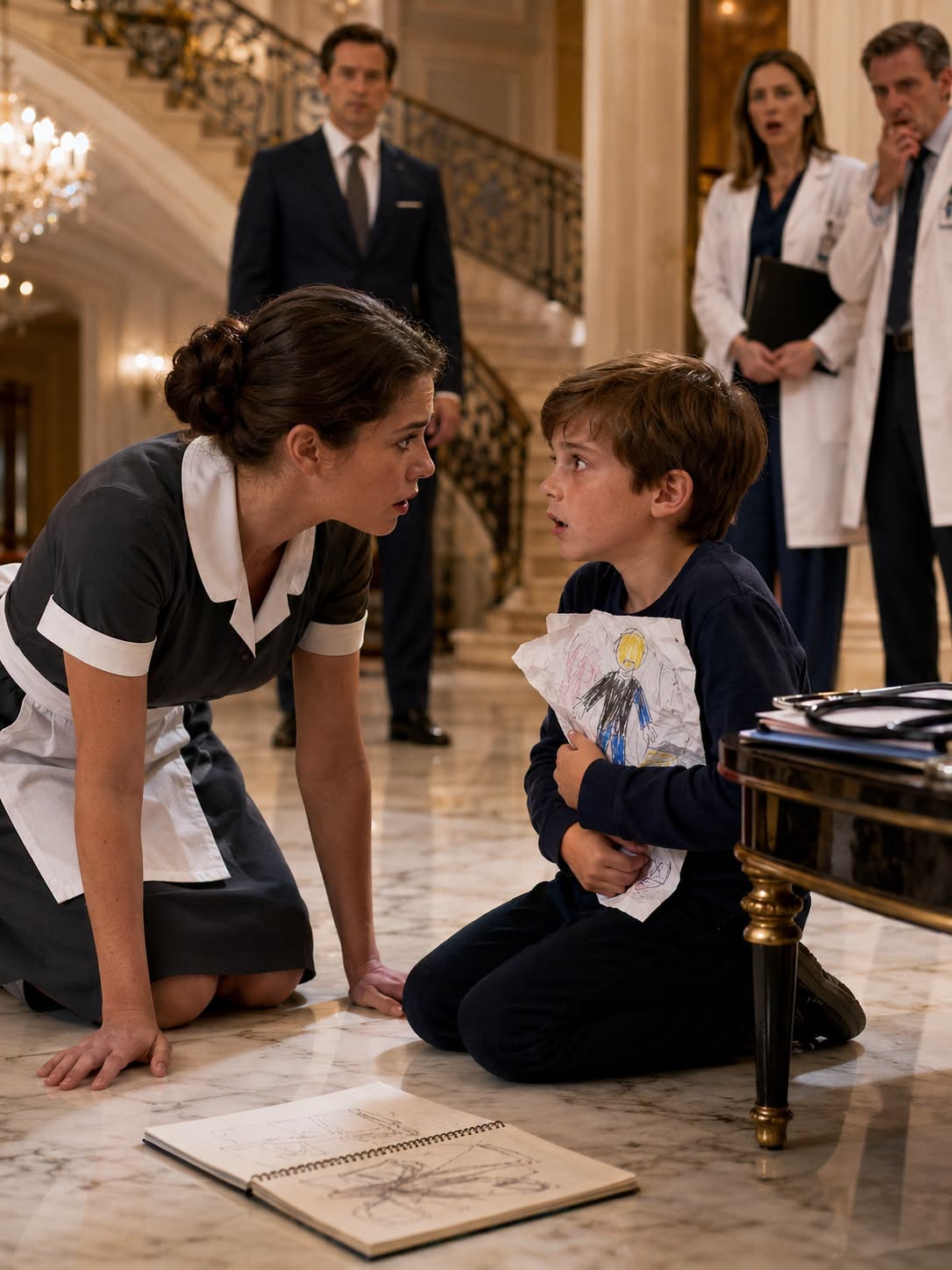
Sophia leaned down until her face was inches from his.
"I’ll be right here when you wake up, Noah," she whispered, her voice thick with emotion. "No more loud machines. No more helmets. I promise."
Noah looked into her eyes for three seconds.
Then, slowly, his small thumb reached up and touched her cheek, leaving a faint trace of warm tears on her skin.
He let go of her hand and let the nurses wheel him through the swinging doors.
For the next four hours, Damian Caldwell and Sophia Bennett sat side-by-side in the empty, quiet waiting room of Operating Room Four.
Neither of them spoke.
The storm outside gradually died down, replaced by the pale, cold gray light of a Boston winter dawn.
At 7:45 AM, the double doors clicked open.
Dr. Hayes walked out, pulling off his surgical mask. He was smiling.
Damian stood up so fast his chair nearly tipped over. "Richard?"
"The operation was a complete success, Damian," Dr. Hayes said softly. "We removed a three-millimeter calcified bone spicule that was resting directly against his facial and acoustic nerve branches. We drained nearly fifteen milliliters of trapped, high-pressure fluid from the mastoid cavity."
May you like


Dr. Hayes looked at Sophia, his eyes filled with profound professional respect.
"If that pressure hadn't been relieved, within another six months the infection would have breached his inner cranial wall. Miss Bennett didn't just save his hearing, Damian. She saved his life."