Chapter 4 - The Medical Illusion
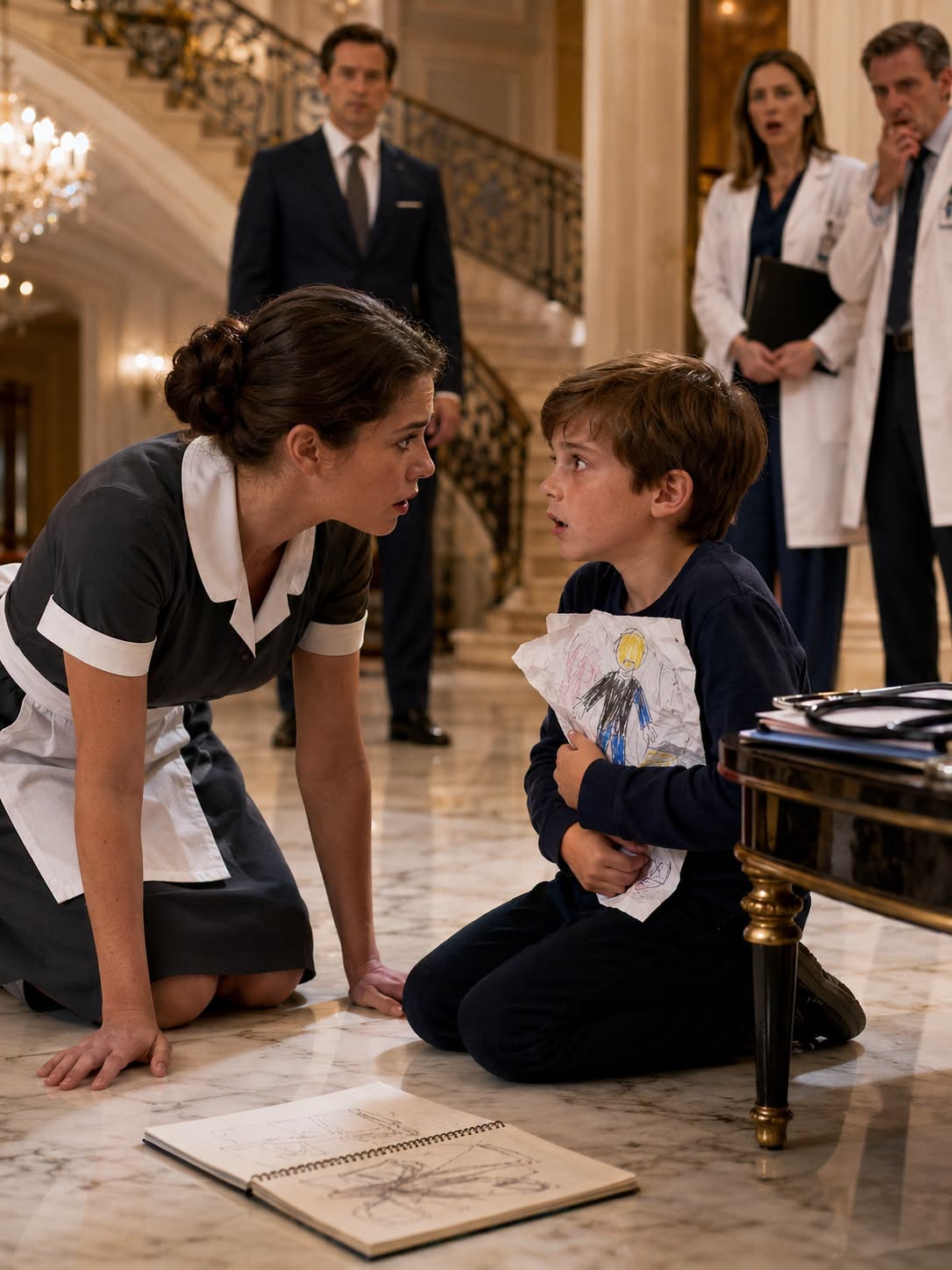
By 2:00 PM, a sleek white Mercedes van with clinical logos on its doors pulled up to the front entrance of the Caldwell estate.
Two men in crisp dark suits unloaded three heavy aluminum equipment cases and carried them up the front steps.
Sophia watched from the upper mezzanine, where she was polishing the wooden banister.
Walking behind the equipment handlers was a tall, silver-haired man in a immaculate navy blazer and gold-rimmed spectacles. He carried a leather briefcase and moved with the easy, arrogant confidence of a physician who charged five thousand dollars an hour simply to sit in a room.
Dr. Julian Vance. Chief of Neurological Pediatrics at the Vance Brain Institute.
Mrs. Patton met him in the foyer, bowing her head slightly in respect—a courtesy she had never extended to any of the house staff.
"Dr. Vance," Mrs. Patton said warmly. "Mr. Caldwell is waiting for you in the east sitting room."
"Thank you, Mary," Dr. Vance replied, his voice smooth, resonant, and practiced. "How has our young man been responding to the new neuro-stimulator protocol this week?"
"He had a small regression last night during the rainfall," Mrs. Patton reported, lowering her voice. "Agitated. Head-striking behavior."
Dr. Vance sighed, shaking his head with practiced pity. "Regrettable, but expected. The neural pathways of a child with his level of auditory processing dysfunction are exceptionally stubborn. The acoustic brain-training helmet we are testing today should help suppress those erratic brainwave spikes. We’re aiming for deep synaptic calming."
Sophia’s hand stopped on the banister.
Acoustic brain-training helmet?
She watched as Dr. Vance and his two assistants carried the equipment cases down the long corridor toward the east wing.
Sophia waited until Mrs. Patton disappeared into the kitchen area. Then, slipping off her apron and leaving her polish bottle on a side table, she moved down the service stairs that ran parallel to the east wing.
The east sitting room had double glass doors that opened onto a courtyard garden. Sophia crept through the side entrance of the conservatory, positioning herself behind a decorative stone pillar lined with tall ficus plants. Through the glass, she had a clear view of the entire sitting room.
Noah was sitting in a high-backed leather chair in the center of the room.
Damian Caldwell stood near the fireplace, his arms crossed over his chest, his face tight with anxiety. Dr. Vance was kneeling beside Noah’s chair, unpacking a complex device from one of the aluminum cases.
The device looked like a padded, heavy bike helmet attached by thick grey cords to a computerized monitor console. Inside the helmet were several metallic nodes and two prominent rubber ear-cups designed to fit snugly over the child’s ears.
Noah was trembling.
His small hands were tucked tightly between his thighs. He stared at the helmet with absolute, raw horror.
"Now, Noah," Dr. Vance said, his voice dropping into that high, patronizing sing-song tone adults often use with children they consider intellectually inferior. "We’re going to put our quiet-crown on again today. Remember? It plays the special musical tones that help your brain relax."
Noah pulled his chin down into his chest, shaking his head violently.
No... no... no... his body language screamed.
Damian stepped forward, his voice pained. "Julian... is the helmet necessary today? He looks terrified."
Dr. Vance smiled smoothly, turning to Damian with an expression of supreme professional patience. "Damian, my dear friend... trauma recovery requires consistency. The acoustic frequency sweep we are delivering through the ear-cups targets the auditory cortex directly. It gently forces the overactive neural circuits to desensitize. If we stop now because of behavioral resistance, we lose six months of progress."
Damian closed his eyes, his jaw working. "Fine. Just... make it quick."
Dr. Vance turned back to Noah. With the help of his assistant, he grabbed Noah’s small shoulders, holding him upright in the chair.
Noah began to thrash. He didn't cry—he had no voice for it—but his breathing turned into frantic, desperate gasps.
"Hold his head still, Marcus," Dr. Vance instructed his technician calmly.
The technician reached down, grabbing Noah’s neck and jaw to stabilize him. Dr. Vance lifted the heavy helmet and shoved it down over Noah’s head, tightening the chin strap until the thick rubber ear-cups sealed flush against the child’s ears.
Through the glass, Sophia saw what happened the exact microsecond those rubber cups sealed against Noah’s right ear.
Noah’s back arched off the chair in a violent, convulsive spasm.
His eyes rolled back into his head. His mouth opened in a silent, agonizing scream that tore through his tiny throat. His hands flew up, clawing frantically at the hard plastic casing of the helmet, his nails leaving red scratches on his own skin.
May you like

"Look at the EEG monitor," Dr. Vance said calmly to his assistant, pointing to a screen showing jagged, red wave lines spiking out of control. "Extremely high limbic reactivity. See how his brain fights the acoustic input? This proves how deep the neural resistance goes. Increase the decibel output on the right channel by fifteen percent to force the pathway open."
"Stop!" Sophia’s voice shattered the room before she even realized she had stepped through the conservatory doors.