Chapter 2 - The ER Witness
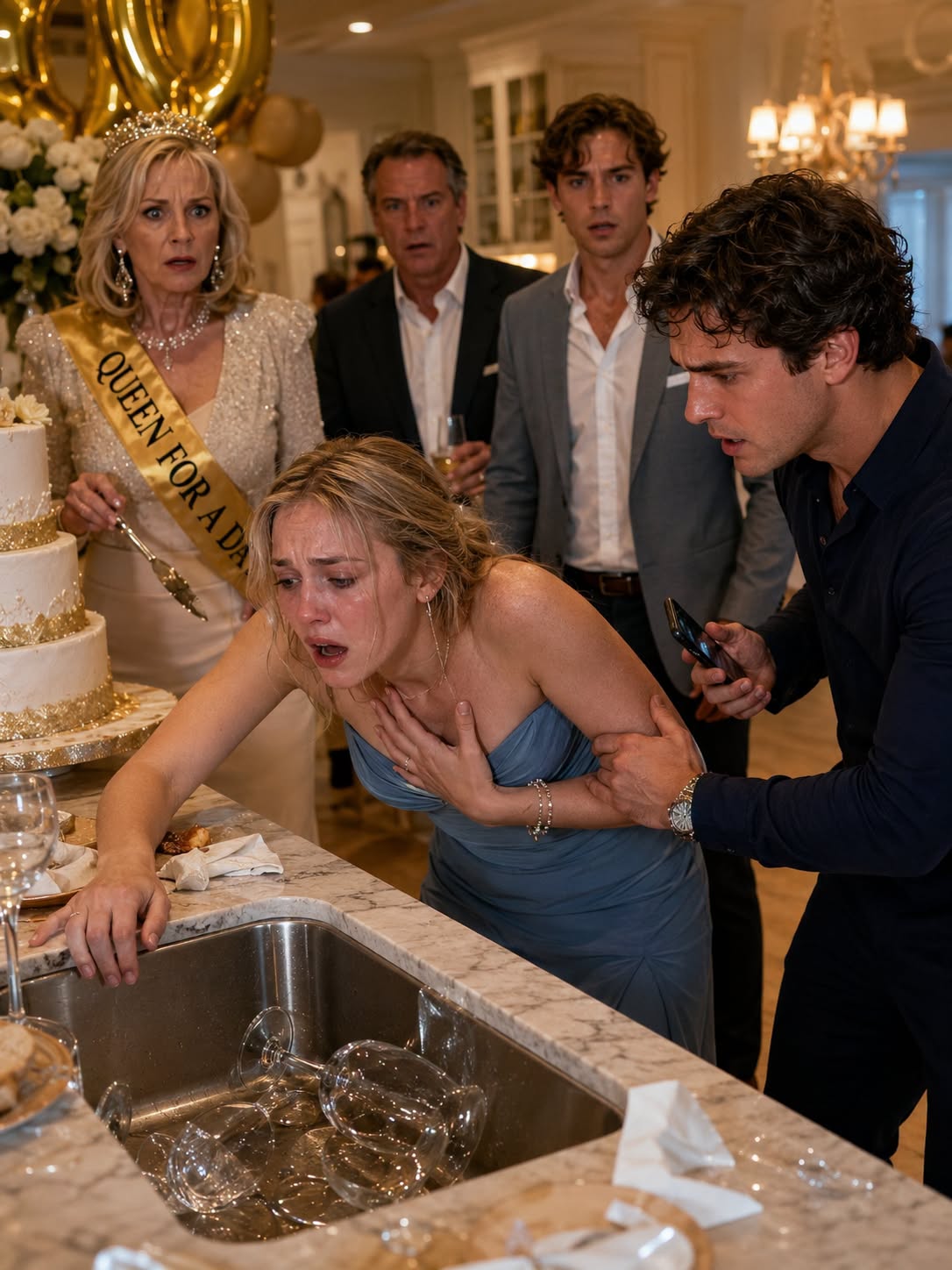
The ambulance doors slammed shut, locking out the gold balloons, the white roses, and the sound of my mother’s rising panic.
Inside, the world shrank to sterile white walls, the rhythmic beep of a cardiac monitor, and the steady, cold hiss of medical oxygen filling the mask over my face. For the first time in five hours, I didn't have to carry a glass. I didn't have to wipe a counter. I didn't have to smile while my chest collapsed under the weight of everyone else’s comfort.
The paramedic, a burly man with silvering hair named Marcus, checked my blood pressure while a second technician started an IV line in my left arm.
“Pulse is sitting at one hundred and forty-two,” Marcus said into his radio, his voice steady and completely devoid of the judgment I had lived with my whole life. “Female, twenty-four, presenting with acute respiratory distress, hyperventilation, and localized numbness in the extremities.”
He looked down at me, his eyes gentle beneath heavy brows. “You’re doing great, Amber. Just focus on my breathing. In for four, out for four.”
I tried. The cold oxygen tasted like metal, but with every second that passed away from that kitchen, my lungs stopped fighting quite so hard against my ribs.
The ambulance rounded a sharp corner, its siren wailing against the night. Sitting in the corner on a fold-down jump seat was Eric.
He hadn't left my side. When the paramedics loaded the gurney into the back, my mother had tried to step inside the vehicle, putting on her trembling, devastated mother face for the crew. Marcus had gently blocked her, asking if she was the legal guardian of an adult patient. When she hesitated, Eric had simply said, “I’m the witness who called 911. I’m riding with her.” Marcus had closed the door right in my mother’s face.
Now, Eric sat leaning forward, his elbows resting on his knees, watching the monitor with intense focus. His jacket was still damp from the rain outside, and he had a piece of my broken champagne glass stuck to the heel of his shoe.
“How is she?” Eric asked Marcus, his voice quiet.
“Stabilizing,” Marcus replied. “Her oxygen saturation was down in the low nineties when we arrived, mostly from extreme hyperventilation and a severe panic-induced bronchospasm. Her body went into total shock.” Marcus paused, looking at Eric. “You said she was gasping for ten minutes before anyone dialed?”
“At least ten,” Eric said, his jaw tightening so hard a muscle twitched in his cheek. “Her mother told her she was drama-seeking and ordered her back to work. Her father called her lazy.”
Marcus didn't yell. He didn't swear. He just slowly shook his head, typed something into his tablet, and whispered under his breath, “Unbelievable.”
That single word from a complete stranger felt like a key turning in a lock I had been trapped behind for twenty-four years.
When the ambulance pulled into the bay at St. Jude’s Memorial Hospital, the rear doors flew open to the chaotic light and noise of the emergency department. I was wheeled through automatic double doors, past rows of gurneys, directly into an observation room in Sector B.
Within three minutes, a triage nurse named Brenda had hooked me up to a new monitor, taken my vitals, and drawn three vials of blood.
“Your blood pressure is elevated, honey, but your lungs are starting to clear,” Brenda said, adjusting the oxygen cannula that had replaced the heavy plastic mask. “The doctor will be in shortly. Who do we have listed as your emergency contact?”
I froze.
The default answer for my entire life had been Sarah Hale. My mother. The woman who held my insurance card, my medical history, and the authority over every decision I made.
Before I could speak, the curtain to my room was jerked back with a sharp, metallic screech.
My father walked in first. His expensive leather loafers clicked against the linoleum. His jacket was unbuttoned, his tie slightly askew, his face flushed with the kind of cold, quiet rage he usually reserved for waiter mistakes or delayed flights. Behind him stood my mother, her gold QUEEN FOR A DAY sash finally removed, though she still held it folded tightly in her manicured hand like a weapon she didn't want to drop. Jake trailed three paces behind them, staring at the floor, his phone held loosely in his right hand.
“There she is,” my mother said, her voice dropping into that dramatic, trembling pitch she used whenever she felt an audience nearby. She rushed to the side of the bed, reaching out her hands as if to throw her arms around me. “Amber! Oh, my God, Amber, we were so terrified! How could you scare us like that?”
I pulled back.
It wasn't a big movement—just two inches of distance against the hospital pillow—but my mother felt it instantly. Her hands froze in mid-air.
“We had thirty people at the house, Amber,” my father said, stepping up beside her and lowering his voice into a stern rumble. “Thirty guests left sitting in the living room while an ambulance pulled into our driveway like we were running a crack house. Do you have any idea what the neighbors are saying?”
“David,” my mother whimpered, dabbing at the corner of her eyes even though there were no tears. “Don't yell at her. She’s sick. Even if it was just an episode...”
“An episode?” Eric’s voice cut through the room like broken glass.
He had been standing in the dark corner behind the vitals monitor, quiet until that very second. Now, he stepped into the overhead fluorescent light.
My father’s head snapped toward him. “Eric. What are you still doing here? This is a private family matter. You can go home now.”
“No,” Eric said. His voice wasn't loud, but it had an edge of total, unyielding disgust that made my brother Jake flinch. “I’m not going anywhere. Because if I leave, you’re going to spend the next hour convincing this girl that she did something wrong by almost dying on your kitchen floor.”
“How dare you!” my mother gasped, stepping around the bed to face him. “You are a guest in our home! You don't know anything about our family! Amber has had a history of sensory sensitivity and dramatic outbursts since she was seven years old! We have spent thousands of dollars on her therapy, her diet, her life!”
“You told her to scrub glasses while her lips were turning blue,” Eric said, looking my mother straight in the eyes without blinking. “I was standing six feet away, Mrs. Hale. I watched you look at her, look at the sink, and tell her she was ruining your birthday.”
The room went dead silent.
Brenda, the triage nurse, stopped typing at her workstation near the door. She looked up slowly, her eyes tracking from Eric to my mother, then to my father, and finally down to me.
My father took a step toward Eric, his chest puffing out. “You need to leave this room right now, young man, before I call security.”
“Call them,” a new voice said.
Dr. Vance, the attending ER physician, stepped through the curtain holding a digital chart. He was a tall man in his late fifties with tired, sharp eyes and a clipboard tucked under his arm. He didn't look at my father. He walked straight to the side of my bed, checked my heart rate on the monitor, and looked down at my face.
“Miss Hale,” Dr. Hayes said softly. “Your blood work came back. Your arterial blood gas showed significant acute respiratory alkalosis caused by severe, prolonged oxygen deprivation during hyperventilation. Your body was in a state of physical shock.”
He turned around slowly and looked at my parents.
“This was not a dramatic outburst,” Dr. Hayes said, his tone icy enough to freeze the room. “This was a medical emergency. If her hyperventilation had continued for another five minutes without intervention, she likely would have lost consciousness, fallen onto the shattered glass at her feet, and suffered head trauma or severe lacerations.”
My mother’s mouth opened, but no sound came out.
My father cleared his throat, adjusting his watch. “Doctor, you don't understand the context here. Amber gets overwhelmed very easily. We were simply trying to keep her grounded—”
“You were neglecting a person in clear medical distress,” Dr. Hayes interrupted cleanly. He looked at Brenda. “Brenda, please note in the patient’s file that the family delayed access to emergency services until an outside witness intervened.”
“What?” my mother shrieked, her voice cracking into a high, ugly register. “You’re putting that in her medical records? That’s libel! We love our daughter!”
“Then start acting like it,” Dr. Hayes said. He turned back to me. “Amber, you are an adult. You are twenty-four years old. I am placing you under observation for the next six hours to ensure your heart rhythm remains stable. Who would you like permitted in this room?”
My parents looked at me. For twenty-four years, their gaze had contained a silent instruction: Choose us. Protect the image. Keep the peace.
I looked at my mother’s pristine cream dress. I looked at my father’s polished shoes. I looked at Jake, who still couldn't look me in the eye.
May you like
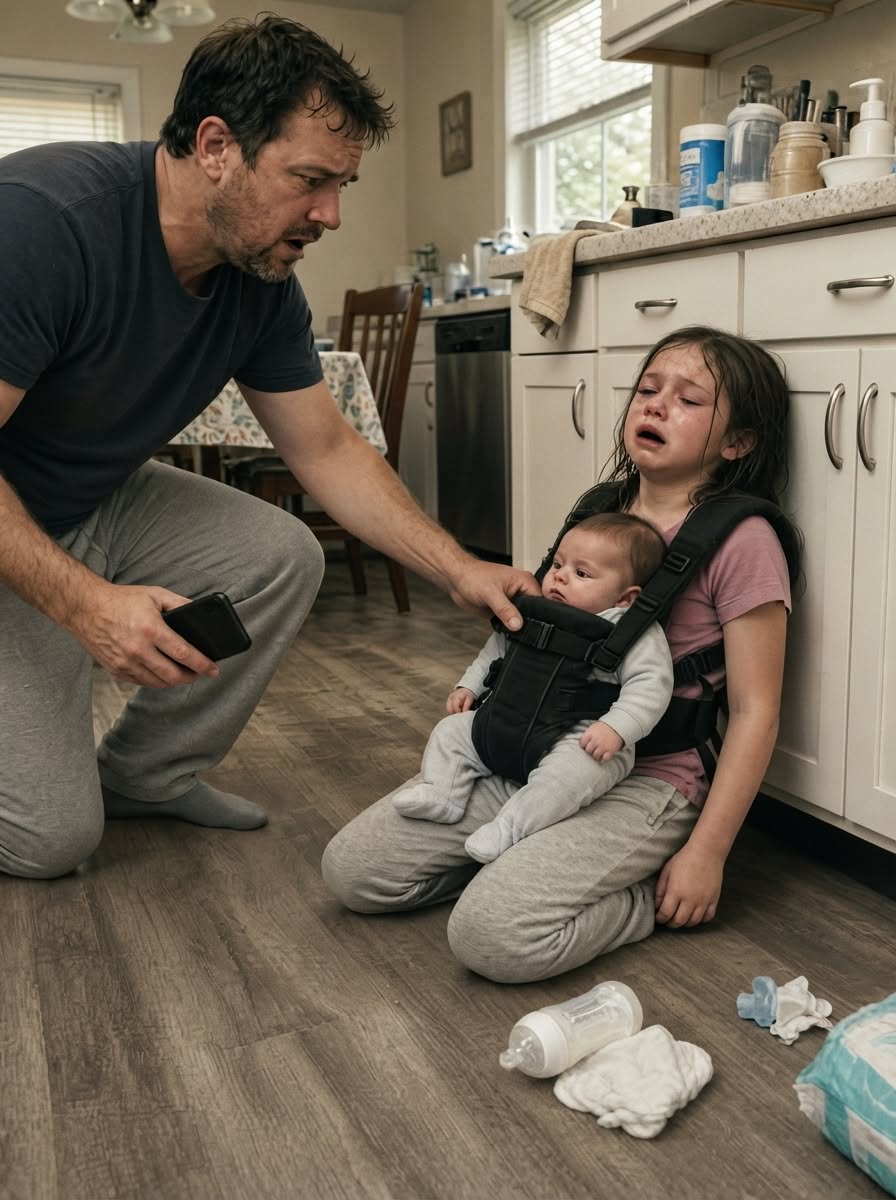


Then I looked at Eric, who was still standing between my family and my bed like a human shield.
“I want Eric to stay,” I whispered, my voice raspy from the oxygen. “And I want my parents to leave.”