Chapter 10 - The Sovereign Legacy
Two years later.
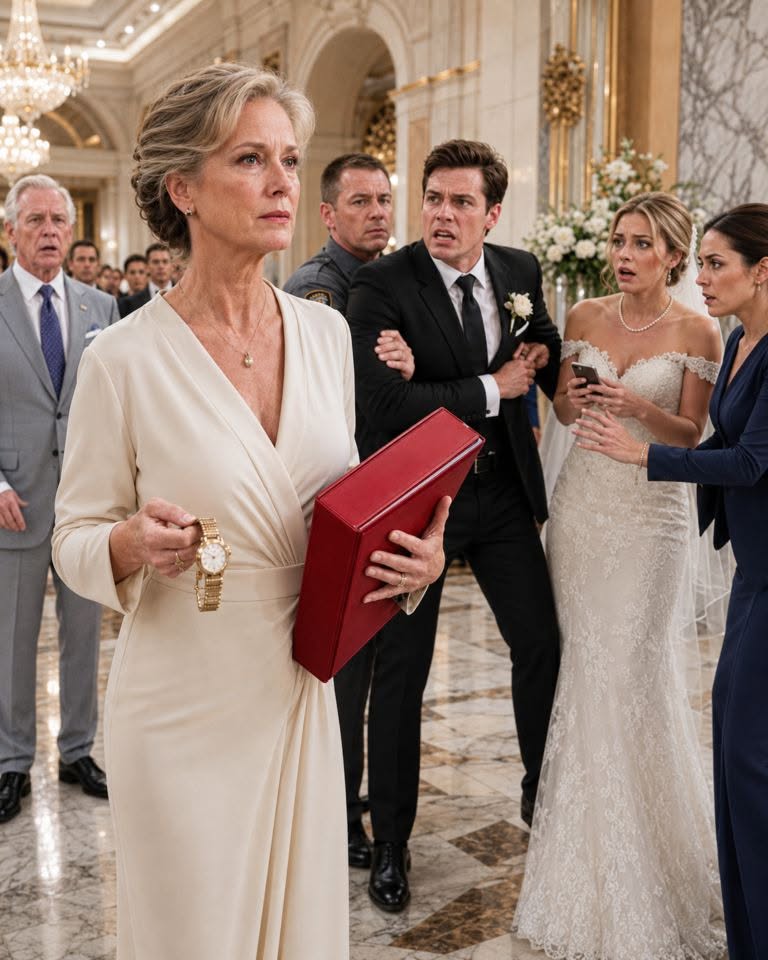
The Grand Ballroom of the Grand Hale Hotel was filled once again with five hundred distinguished guests, floral arrangements, and glittering crystal chandeliers.
It was the 30th Anniversary Gala of Hale Hospitality Group.
Ministers, corporate leaders, international hotel developers, and community organizers gathered around long banquet tables, celebrating three decades of business excellence and philanthropic impact.
On the main stage stood a podium bearing the golden crest of the Arthur & Eleanor Hale Foundation.
I stepped up to the microphone, dressed in an exquisite royal blue gown—the same shade as the dress I had worn to St. Andrew’s Church three years ago.
The room erupted into thunderous, standing applause.
I smiled, raising my hands gently to quiet the crowd.
"Thirty years ago," I began, my voice carrying clearly through the high-end audio system, "I started this company with seven hundred dollars, a second-hand stove, and a dream that hard work could build a future for my family."
The audience listened in rapt attention.
"Along the way, I learned that success isn't measured by the height of your towers, the cost of your dress, or the titles printed on your business cards," I continued. "True success is measured by the character you build when everything you thought you owned is stripped away."
I turned my head slightly toward the side of the stage.
Standing near the kitchen service doors, wearing a crisp black executive suit, was Daniel.
He was no longer the Chief Development Officer who stole millions to buy prestige. He was now the Operations Director of the Hale Community Kitchens—a division that fed ten thousand families a month and trained hundreds of underprivileged chefs across the state.
"Tonight," I said, looking directly at my son, "I am proud to announce the opening of three new culinary academies across the region, overseen by our Director of Community Operations—Daniel Hale."
The crowd applauded warmly, turning to look at Daniel.
Daniel didn't puff his chest out. He didn't sneer. He simply bowed his head with quiet, humble dignity, offering a respectful nod to the audience before stepping back into the shadow of the service wing to monitor the catering staff.
An hour later, after the speeches had ended and the guests had begun dancing, I walked down the grand marble hallway toward the quiet garden terrace overlooking the harbor.
Daniel was standing near the stone balustrade, watching the silver moonlight reflect off the water.
I walked up beside him, the cool evening breeze gently moving my dress.
"You ran a flawless event tonight, Daniel," I said softly.
"The catering team did the hard work, Mom," Daniel smiled gently. "I just made sure the ovens were hot."
I reached into my silk handbag.
I pulled out a velvet-lined wooden box and set it on the stone ledge between us.
Daniel looked down at the box. He recognized it instantly.
Slowly, with trembling fingers, he opened the latch.
Inside lay his father’s gold pocket watch, polished to a brilliant, mirror-like shine, its internal balance wheel ticking with steady, perfect precision.
Tick. Tick. Tick.
Daniel looked up at me, his eyes wide with deep, emotional shock. "Mom... no... I can't accept this... I haven't—"
"You have," I interrupted softly, reaching out and gently closing his fingers around the warm gold casing. "Your father bought this watch with honest sweat. He wore it every day to remind himself why he worked so hard for the people he loved."
I looked into my son’s eyes—eyes that were now filled with honor, humility, and strength.
"You are finally worthy to wear it, Daniel," I said softly.
Daniel clutched his father’s watch against his chest, tears spilling down his cheeks, a soft, broken smile touching his lips.
"Thank you, Mom," he whispered, pulling me into a warm, fierce embrace. "I'll keep perfect time."
May you like

I wrapped my arms around my son, looking out over the glittering city lights, feeling the solid, unshakeable peace of a home finally restored.
The storm had passed. The empire remained. And the truth had set us free.